

Nazli Togan works as a health communicator at the Refugee Medical Center, Region Östergötland. She and her colleagues have both medical training and language and cultural competence from countries that many new arrivals come from.
Being able to speak your native language makes it easier when you come to Sweden, and meeting someone from the same culture also makes life easier. Cultural competence can, for example, be about understanding attitudes towards tobacco. Nazli Togan has her own childhood memories of how smoke filled the rooms when guests came home. Smoking was part of the culture during her childhood. It was very common to offer cigarettes at celebrations to fulfill a social expectation.
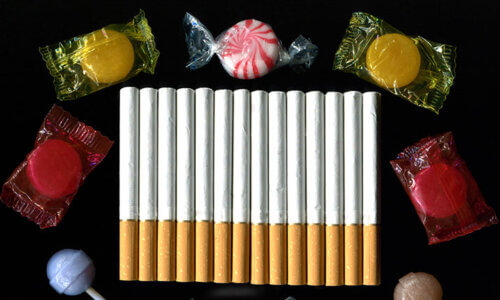
– If it was Christmas or Easter, you had the candy bowl in one hand and the cigarette bowl in the other. You were ashamed if you didn't offer cigarettes. It shows how accepted tobacco can be in some countries compared to Sweden.
Cultural competence can also be about understanding the attitude towards healthcare. Misunderstandings sometimes occur in encounters with healthcare when one neither knows the language nor understands the system.
– Some migrants have a different view of healthcare and when they go to the doctor with a health problem, they almost expect the doctor to make them healthy. That's where we health communicators come in, we inform migrants about how healthcare works and the importance of self-care.
As a certified tobacco cessation counselor, Nazli Togan wants to help the patient understand that they must cooperate. The tobacco cessation counselor cannot do the job alone. An important aspect is also to inform that it is possible to quit smoking, that help and support is offered in the community, and where help is available.
– Getting help to quit smoking for free from society is not something everyone expects when they come to Sweden because that help was not available in their home countries.
When it comes to quitting smoking, younger people are often the most motivated to quit, says Nazli Togan. A real sunshine story is the man who quit completely in just a few days.
– He was 35 years old and a dance teacher. He had been in Sweden for a year and really wanted to get a job and be a good role model for his future students. He felt he had to quit smoking as soon as possible.
Nazli Togan and the dance teacher worked on his smoking habits, other lifestyle habits, his beliefs about the harmful effects of tobacco, his motivations, and his plan for quitting. Thanks to his motivation and support, he soon became smoke-free.
– It was fantastic for both him and me, says Nazli Togan.
But of course it's not always that easy. There can be many obstacles along the way.
– Unfortunately, many migrants are mentally ill, especially when they are new to Sweden. This makes it more difficult to quit smoking. This requires more motivation and support throughout the treatment process. It is often valuable to repeat the information several times because it can be difficult to concentrate. Sometimes we reinforce the message by using pictures and also provide written information in the native language.
Despite the difficulties, it is important to have high goals when it comes to the health of people born abroad. The goal is equal health and good health is a prerequisite for successful integration, explains Nazli Togan. The health communicators will contribute to achieving the goal, among other things by conveying knowledge about a health-promoting lifestyle. They will motivate, support, coach and inspire.
The work of health communicators is also aimed at staff, offering consultations on patient or family matters, lectures on cultural encounters in healthcare, and lectures on how to work with tobacco cessation for those born abroad in their native language.
– When we work with tobacco cessation, we also work with other lifestyle habits because we know that most of our participants also have other problems. They may not eat as well, they are less physically active and so on.
An important aspect of tobacco cessation is that many people who are new to Sweden have poor finances. The cost of nicotine replacement therapy can discourage people from purchasing it, which makes treatment more difficult.
– I have discovered that some people cannot afford to buy nicotine medication. I have had conversations with several health centers and asked the doctors to write it on a prescription. Even if it is only a few kronor in discount, it motivates the patient to buy nicotine medication.
Nazli Togan's hope is that healthcare, especially primary care, will facilitate tobacco cessation by prescribing nicotine replacement therapy for those who have the most financial difficulties.
Tobacco cessation is not just about quitting smoking cigarettes, especially in this target group, Nazli Togan also sees another challenge, reducing the use of hookah. Hookah is partly culturally conditioned. Most are introduced by older young people and peer pressure is common. There are misconceptions that hookah is something harmless, says Nazli Togan.
–Sometimes when I lecture and ask how many people use tobacco, a few people raise their hands. But when I ask if anyone smokes hookah, many more people raise their hands. Not everyone always understands that hookah smoking is using tobacco. Many people think that hookah smoking is not that dangerous because the smoke tastes and smells good. People also don't always understand that it leads to addiction, says Nazli Togan.
Facts about hookah
Because the smoke from a hookah can taste like vanilla, fruit or caramel, many people believe that it is completely harmless. The tobacco smoked in hookahs contains nicotine. It is not known for sure how addictive hookah smoking is. The water absorbs some of the nicotine. But this means that smokers need to smoke longer and more to satisfy their nicotine craving. The smoke from a hookah contains a mixture of tobacco smoke and smoke from the coal that keeps the tobacco glowing. Analyses of the smoke show that it contains at least as much carbon monoxide, tar, heavy metals and carcinogens as cigarette smoke. A one-hour hookah session is equivalent to the smoke from about 100 cigarettes. Passive smoking is just as dangerous as cigarette smoking. There is no evidence that any accessory can make hookah smoking safer.
Source: Healthcare Guide
